Christmas Lighting Budget Planning 2026: A Council & BID Checklist
11 August 2026
Earlier this month, the Mayor of London announced a first-of-its-kind fund: £15.6 million for local authorities to work directly with women and girls to audit and redesign public spaces, as part of a wider £37 million strategy building on his £318 million cumulative investment in tackling violence against women and girls (VAWG). Community research teams will gather views and help audit public places, with likely outcomes including improved CCTV and better lighting.
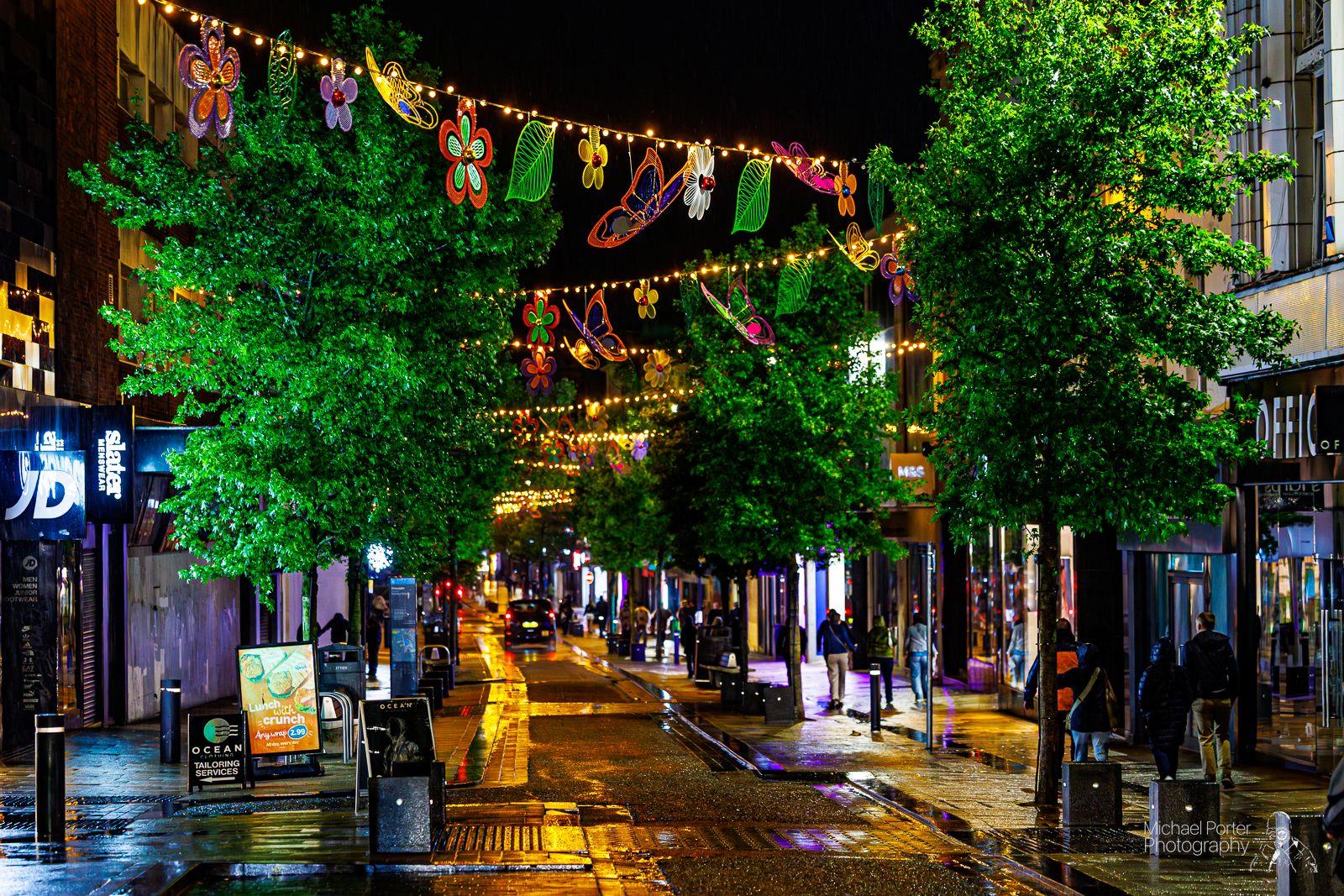
It’s a London-specific scheme, run through City Hall, the Mayor’s Office for Policing and Crime, and TfL, not a national pot every council can apply to. But it’s a signal worth paying attention to well beyond London. It reflects a shift that’s been building since the introduction of the Home Office’s Safer Streets Fund in 2020: public realm safety, and specifically how well or badly a space is lit, has moved from an afterthought in council budgets to a named policy priority with its own funding line.
For those of us who work in public and commercial lighting, that shift matters. It’s an invitation to think harder about what “safe” lighting actually means, and to make the case that safety and destination-building aren’t competing priorities. Done well, they’re the same project.
The instinct when “safety lighting” comes up is often to think of it in fairly blunt terms: brighter, harsher, more CCTV-friendly. But the evidence on what actually makes people, and specifically women, feel safer at night points somewhere more nuanced.
A few principles consistently come up in research and in Crime Prevention Through Environmental Design (CPTED) practice:
The point is that the same design thinking that makes a street feel safe after dark is the design thinking that makes it somewhere people want to be after dark. A well-lit alley that only exists to satisfy a safety audit checkbox is a missed opportunity. A well-lit alley that also becomes a route people choose to walk, browse, or linger in, is doing double duty: for public safety, and for the evening economy that BIDs and high streets increasingly depend on.
Business Improvement Districts sit in an interesting position here. They’re not the direct recipients of funds like London’s, but they’re often the ones commissioning public realm lighting (festive schemes, permanent architectural lighting, wayfinding) with footfall and dwell time as the primary business case.
What the Mayor’s approach suggests is that safety and destination lighting can be designed as one investment rather than two. A BID commissioning a lighting refresh for commercial reasons has an opportunity to build in the safety-audit thinking that schemes like this are formalising, consulting the people who actually walk those streets after dark, rather than assuming what “well-lit” should look like. And a council allocating safety funding has a genuine opportunity to spend it in a way that also supports the high street it sits on, rather than treating safety and vibrancy as separate budget lines.
Perhaps the most transferable idea in the Mayor’s strategy isn’t the money; it’s the method. Rather than assuming which junctions, parks, or alleyways need attention, the scheme is built around asking women and girls directly, and using that local knowledge to shape where investment goes.
That’s a principle any council or BID can adopt regardless of budget size: before specifying a lighting scheme, walk the space at night with the people who use it. Ask where they slow down, where they choose a longer but better-lit route, where they avoid altogether. It costs nothing and it consistently surfaces problems that a desk-based audit misses.
We don’t think the answer to “how do we make streets safer” is simply “install more lights.” But we do think lighting design, done with the same care and consultation the Mayor’s strategy is asking for, is one of the most cost-effective, visible ways councils and BIDs can act on both safety and vibrancy at once.
If you’re a council or BID thinking through how to spend a safety or public realm budget in a way that does more than tick a box, we’d welcome the conversation.